
Ape Law publishes 14 case studies on tokenization, licensing, structures, transactions and disputes. This register links each first-party account to its original page and matching explanatory diagram. The diagrams do not independently verify a client outcome.[6]
Understanding the question
Each record below identifies the original Ape Law case page, its stated issue and an editorial diagram based on that account. These are first-party narratives. They do not turn anonymised client work into independent proof of identity, regulatory approval, financial result or universal suitability.[6]
Use the original case page to read the full context. The diagrams summarise a decision sequence or evidence pattern; they are illustrations of what Ape Law published, not separate sources or regulator records.
Published case accounts and diagrams
All 14 records link to Ape Law’s original case pages. The images explain those first-party accounts; they are not independent evidence of a client result, regulator permission or award.
Tokenization & Web3 infrastructure
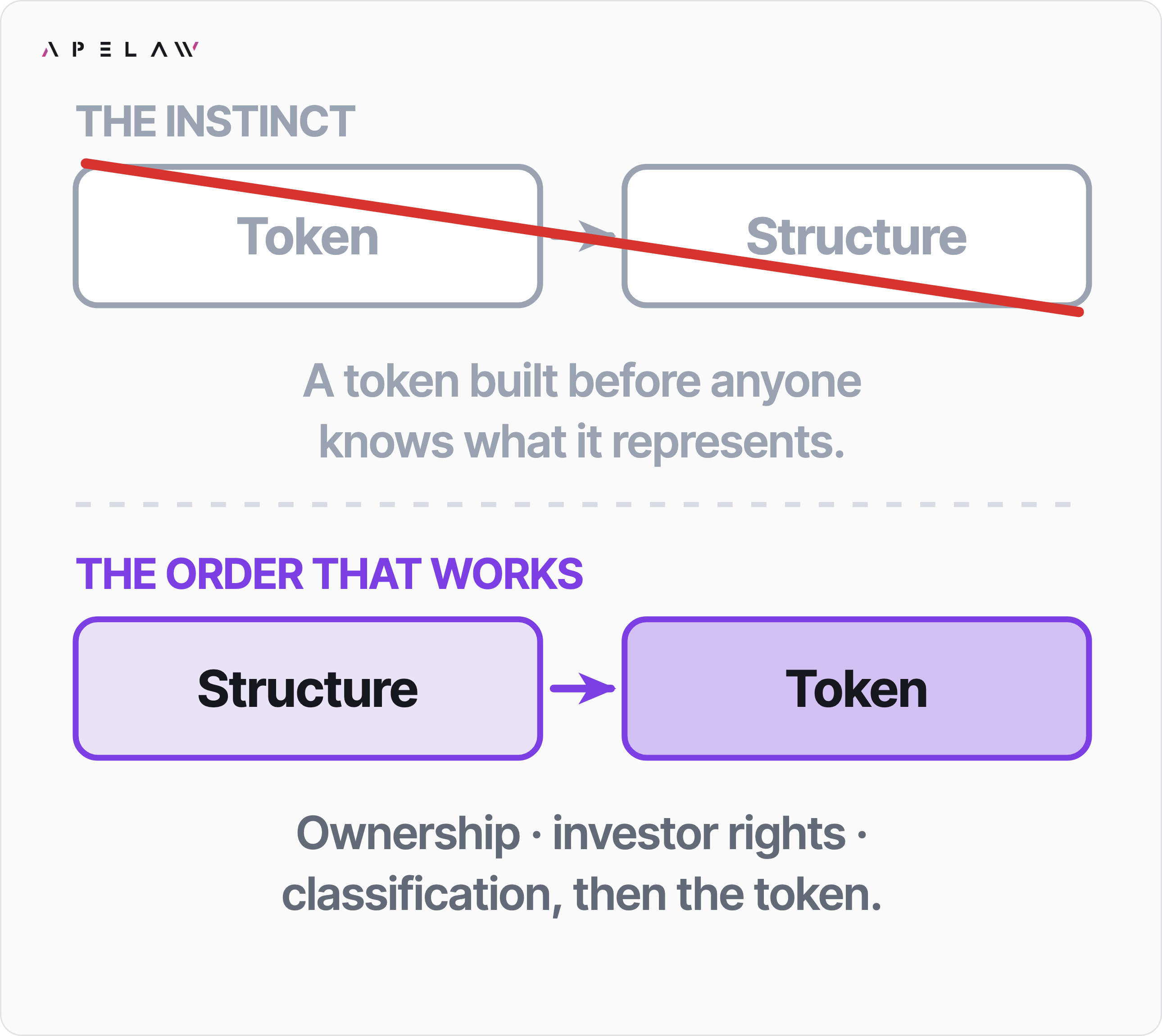
Why Tokenization Should Not Start With the Token
A private markets sponsor started with the token. The review started with the asset, who owned it and what investors would receive. Those answers shaped the platform and licensing plan.[6]
- Issue described
- The token was being treated as the starting point
- Work Ape Law describes
- We started by mapping the product, ownership, investor rights and money flows. That work shaped the regulatory pathway, licensing strategy and regulator engagement. The token could then be designed around a structure that made sense.
- Reported change
- A regulator-ready structure with a clear path forward
View the matching diagram
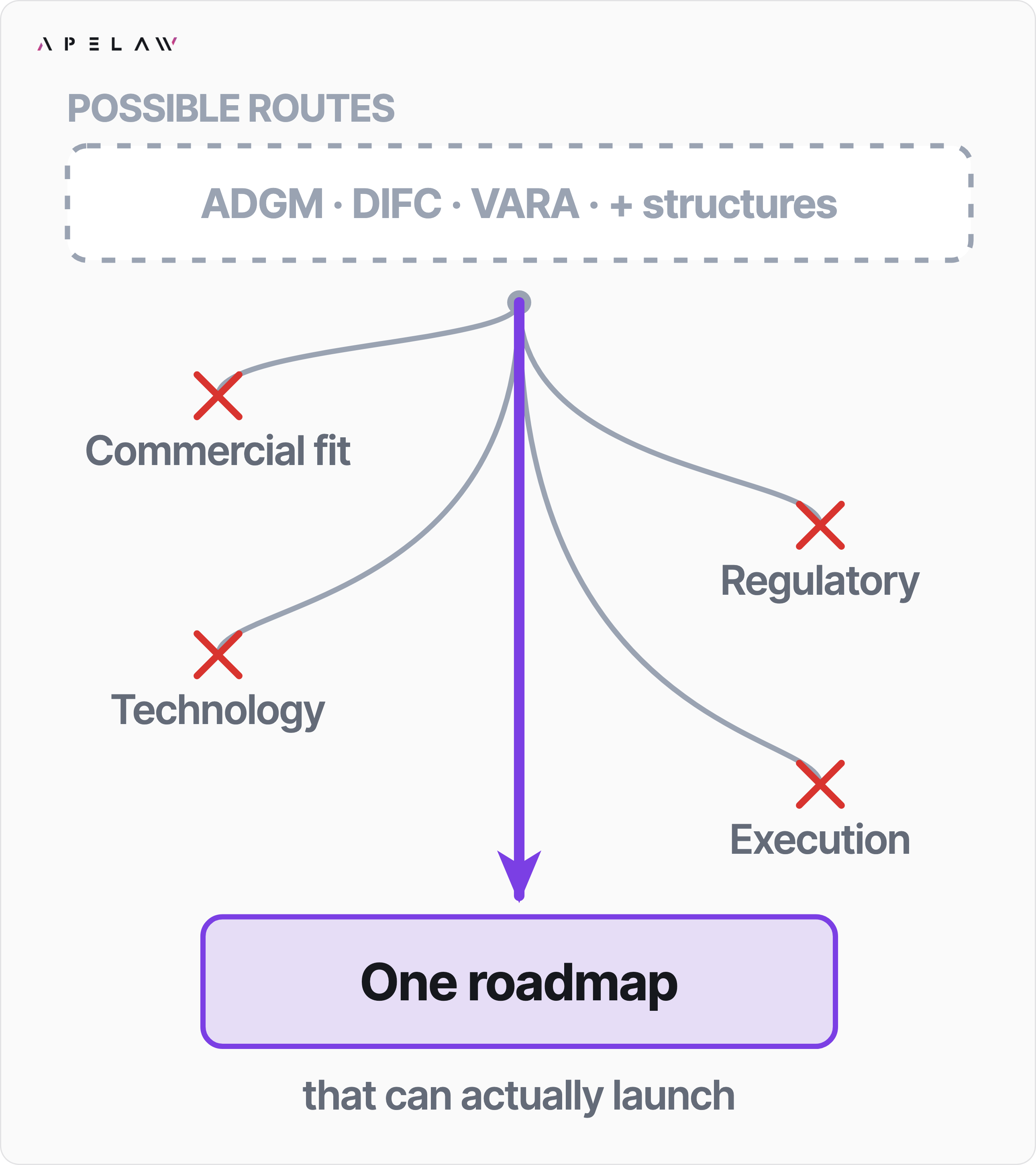
How We Chose the Right RWA Tokenization Path
An asset manager had several tokenization routes to choose from. The review compared the costs, obligations and technology needs, ruled out poor fits and set out the next steps.[7]
- Issue described
- More options created more confusion
- Work Ape Law describes
- We compared the available jurisdictions, structures, licensing pathways and technology options against the commercial objectives of the project. The options that did not make sense were ruled out. The strongest pathway was then developed into a realistic roadmap.
- Reported change
- A realistic roadmap built around the strongest path
View the matching diagram
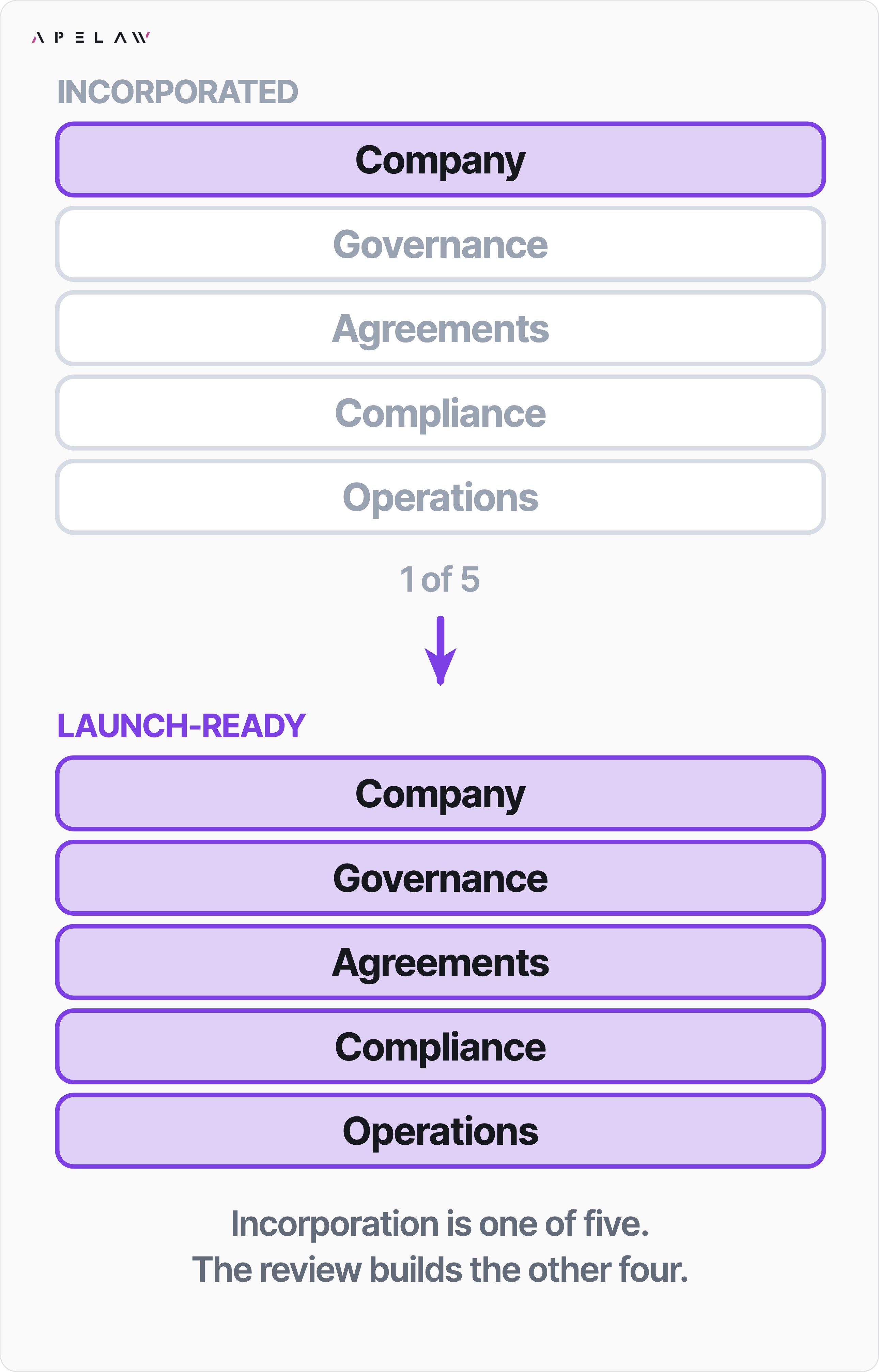
This Company Was Incorporated. It Still Wasn’t Ready to Launch.
The company had been incorporated, but its tokenization and investment business was not ready to launch. The next work covered governance, agreements, compliance and day-to-day responsibilities.[8]
- Issue described
- Thought they were ready to launch
- Work Ape Law describes
- We worked through the business in the order it would actually operate. First the commercial objectives, then the regulatory requirements, the corporate structure, the legal documents and the ongoing compliance framework.
- Reported change
- Foundations in place before launch
View the matching diagram
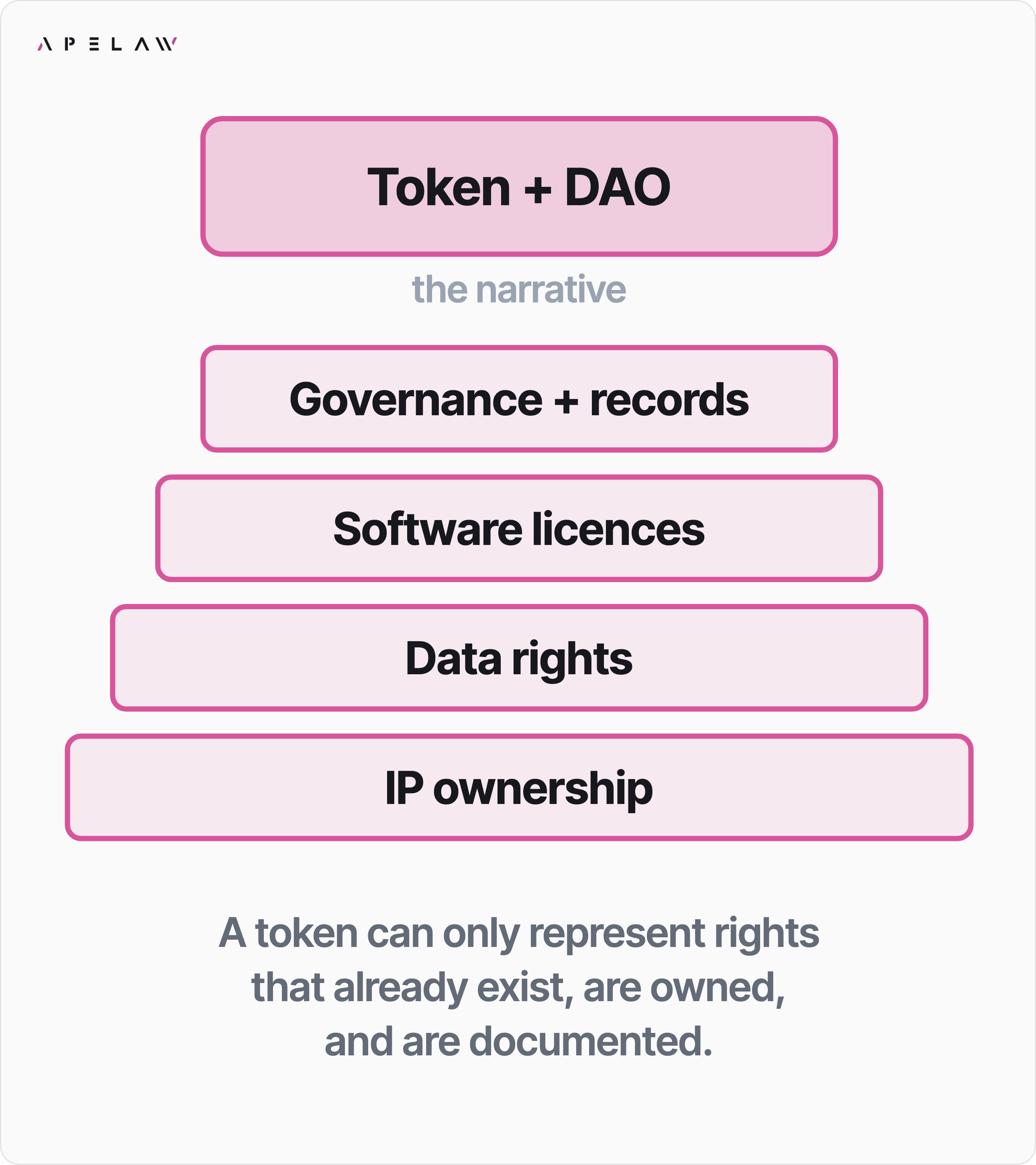
A Token Cannot Create Rights That Do Not Exist
A Web3 platform was building a token and DAO. It first needed clear ownership and licences for its data, software and IP, so the project could support the rights it described.[16]
- Issue described
- The token narrative sat above unclear legal rights
- Work Ape Law describes
- We reviewed the group structure, asset ownership, licensing arrangements, governance and corporate records. Once the legal rights were clear, we could strengthen the infrastructure beneath the token and DAO.
- Reported change
- Legal infrastructure built beneath the ecosystem
View the matching diagram
Licensing & classification
How We Created an ADGM Pathway for a Web3 VC
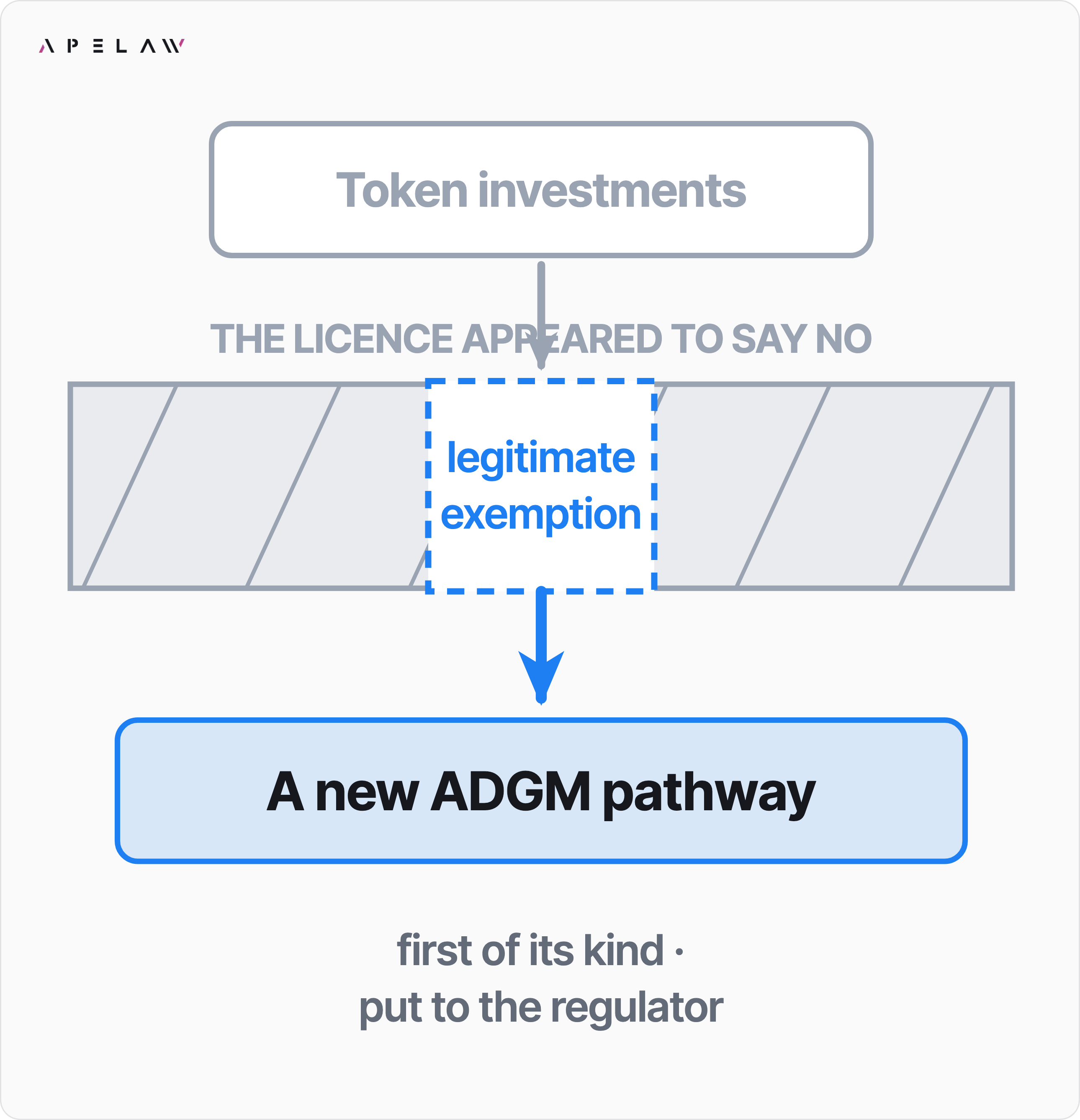
A Web3 fund wanted to invest in equity and tokens. Its existing ADGM position appeared to rule out token investments. Research and regulator discussions helped establish a route forward.[9]
- Issue described
- The licence appeared to rule out token investments
- Work Ape Law describes
- We did not begin with assumptions about what the regulator would accept. We started by understanding the regulatory objective, researching previous decisions and identifying a legitimate exemption pathway. We then built the strategy around that pathway and engaged directly with the regulator.
- Reported change
- A new ADGM regulatory pathway created
View the matching diagram
This Crypto Exchange Thought the Licence Was the First Step
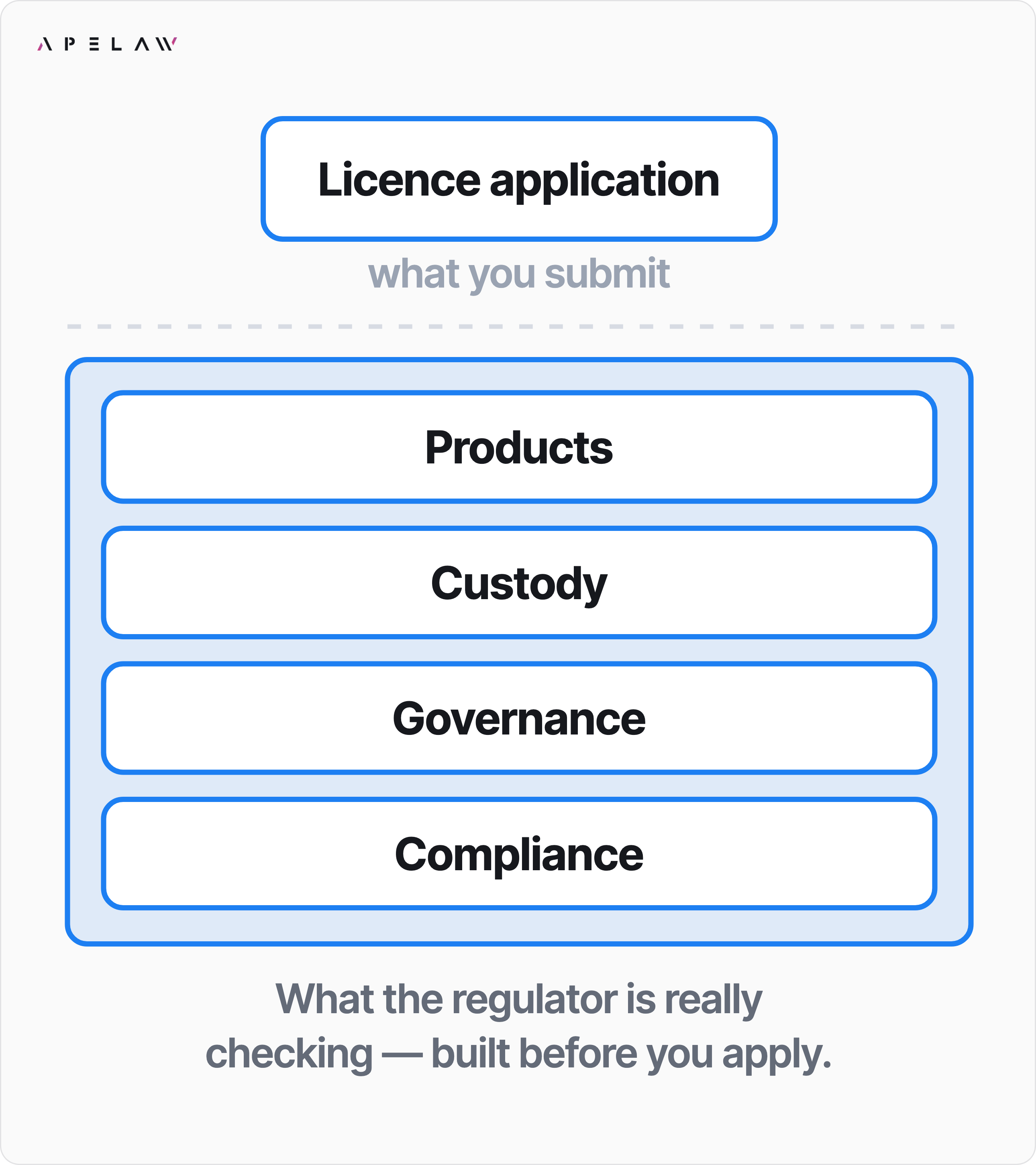
An Australian exchange was planning a UAE launch. Before choosing a licence, the team needed to work through its products, custody, governance and compliance arrangements.[10]
- Issue described
- Started with the application
- Work Ape Law describes
- We started by mapping the business, checking what was already in place and identifying what a regulator would expect to see.
- Reported change
- Clear license and launch roadmap
View the matching diagram
Why This ADGM Exchange Needed a Phased Licence Strategy
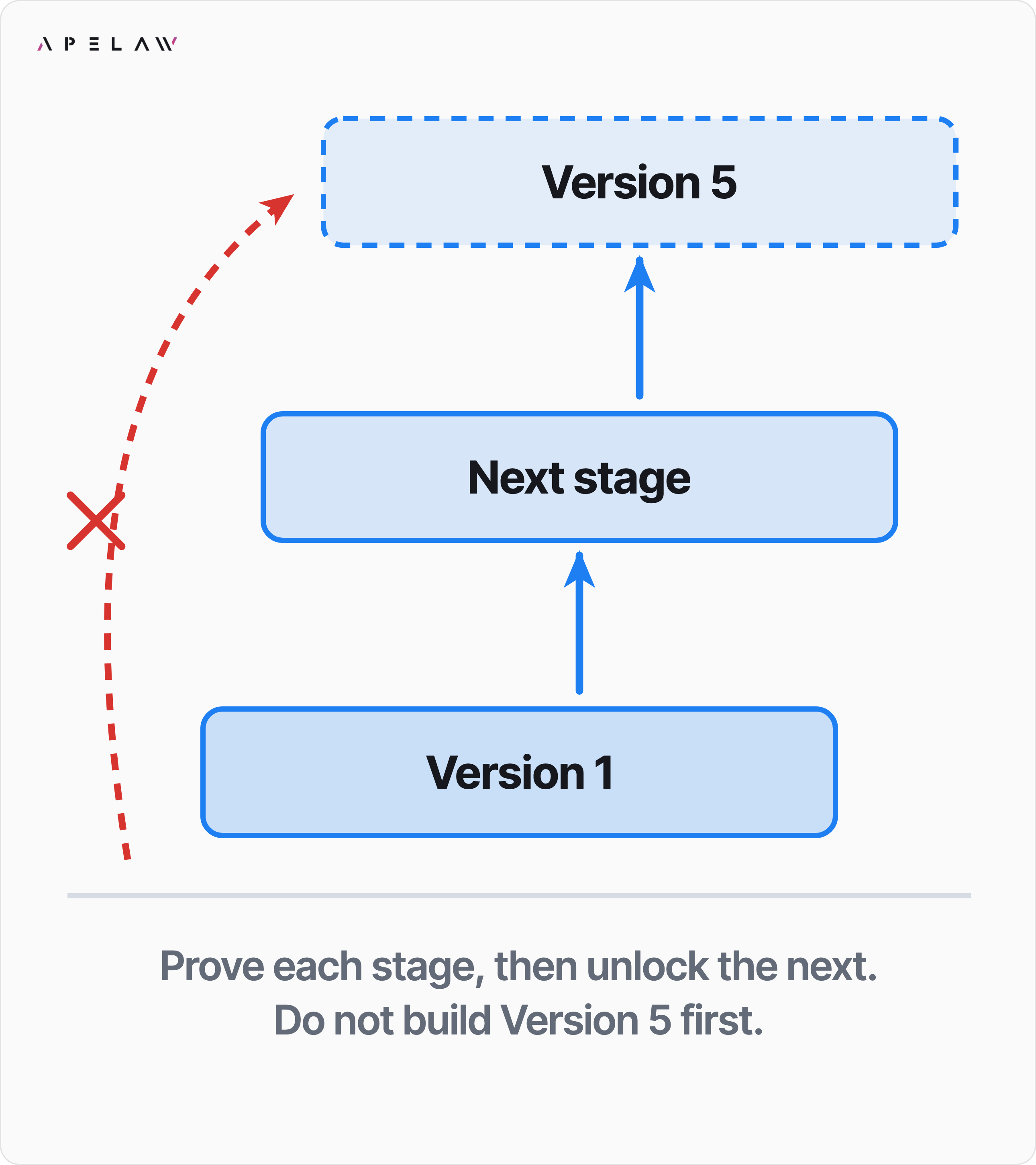
An exchange wanted to apply for its final ADGM licence straight away. The review gave it a staged plan for the product, people and systems it needed first.[11]
- Issue described
- The biggest licence looked like the right first step
- Work Ape Law describes
- Instead of preparing one giant regulatory application, we designed a phased roadmap. Each stage focused on what the business needed to prove, build and operate before the next stage made sense.
- Reported change
- A phased ADGM licensing roadmap
View the matching diagram
Why This Prediction Market Needed Classification Before Licensing
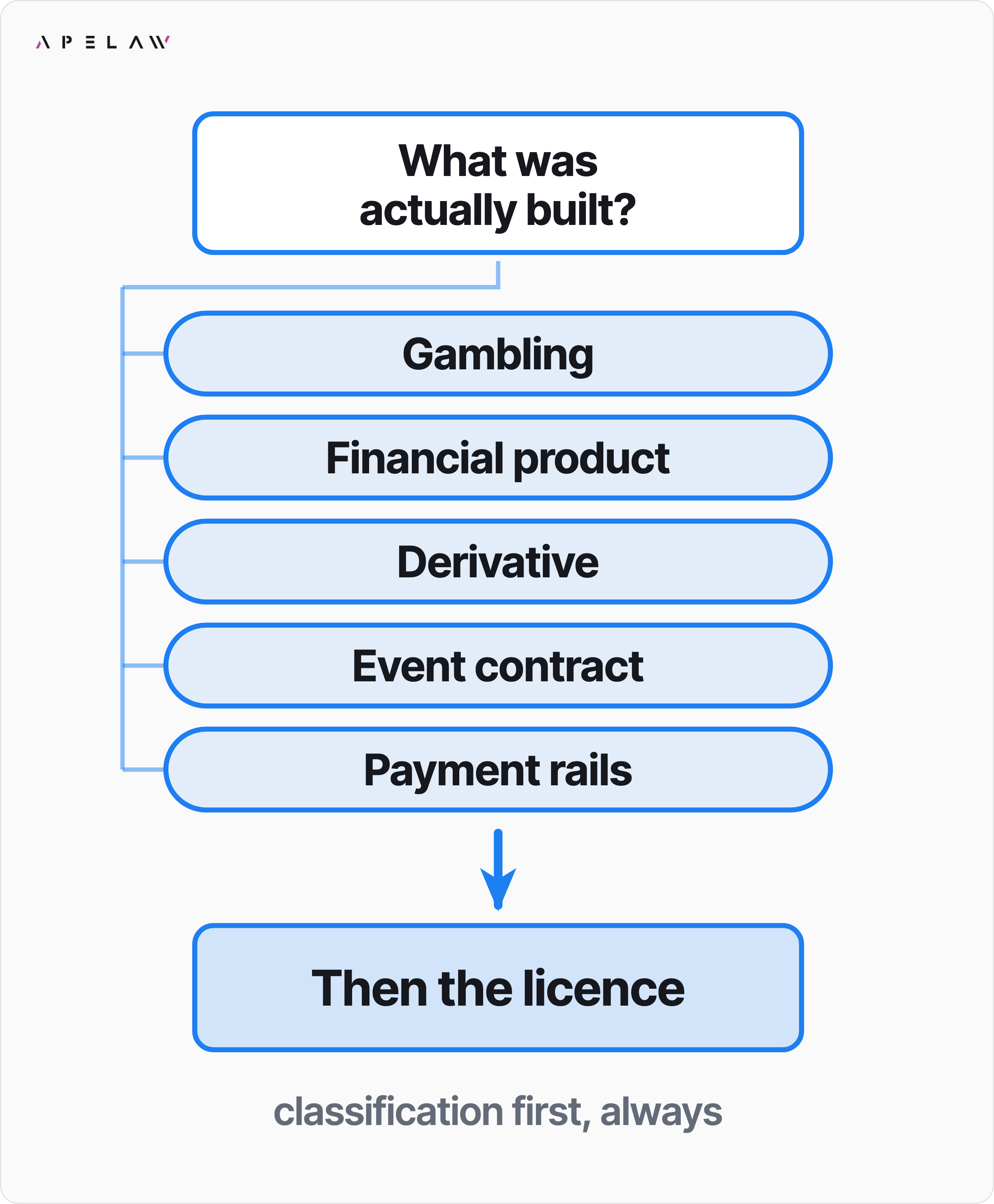
The founder asked which licence the platform needed. That depended on how the product worked and how different jurisdictions would classify it. The review started there.[12]
- Issue described
- The founder started by searching for a licence
- Work Ape Law describes
- We started by analysing how the prediction-market platform would work. We then considered how different jurisdictions could characterise it, mapped the possible licensing options and built a phased regulatory roadmap around the most viable pathways.
- Reported change
- A phased regulatory roadmap built around the product
View the matching diagram
Structures & transactions
This Staking Platform Could Not Live Inside One Company
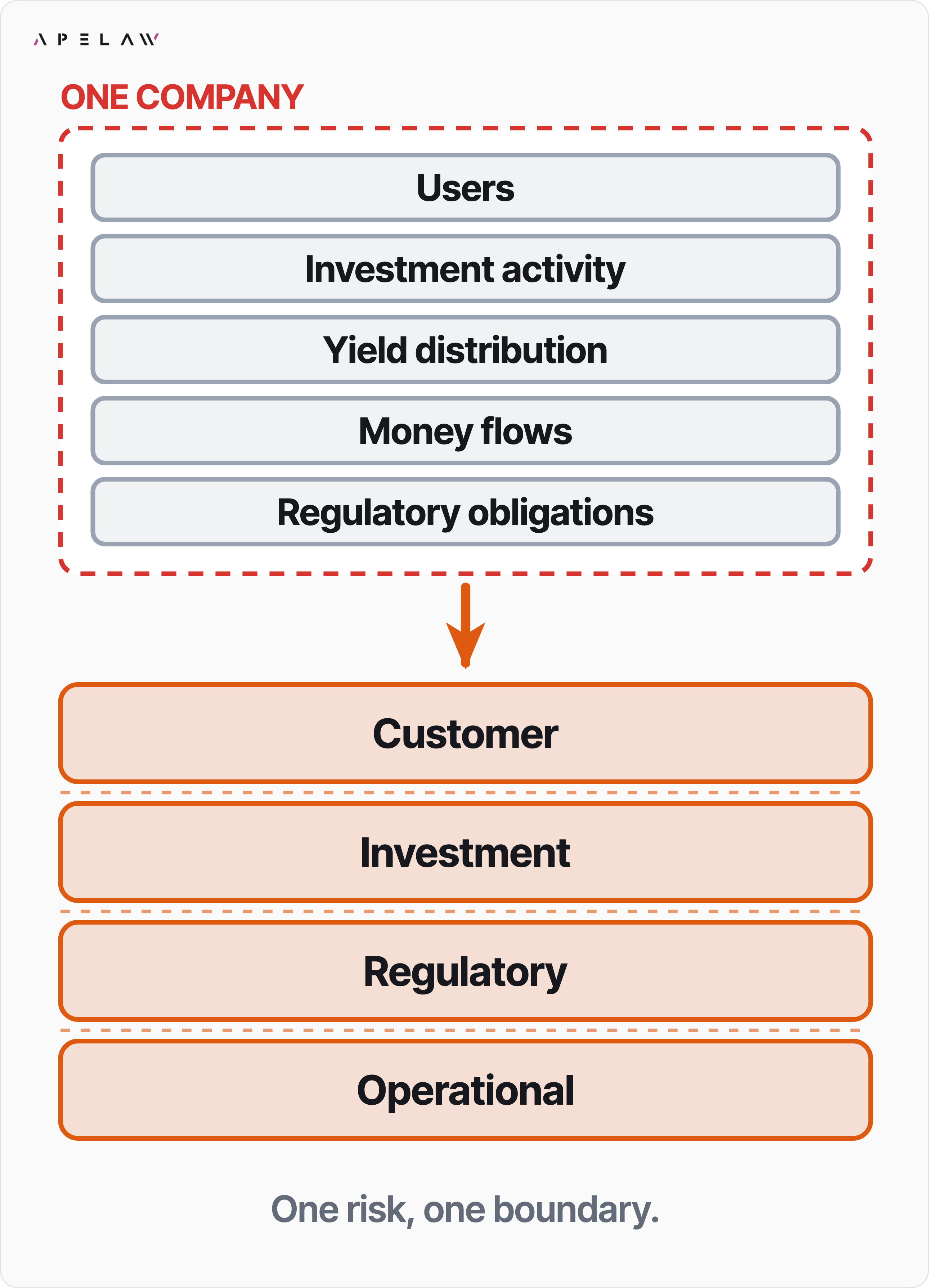
A staking platform planned to keep its users, investment activity and money flows inside one company. The review separated those activities and gave each entity a clear role.[13]
- Issue described
- One problem could put the entire business at risk
- Work Ape Law describes
- We started by mapping the users, activities, obligations and money flows. Once the risks were clear, the right entity structure became much easier to see.
- Reported change
- A structure built to contain problems before they spread
View the matching diagram
This Founder Thought They Needed a Fund
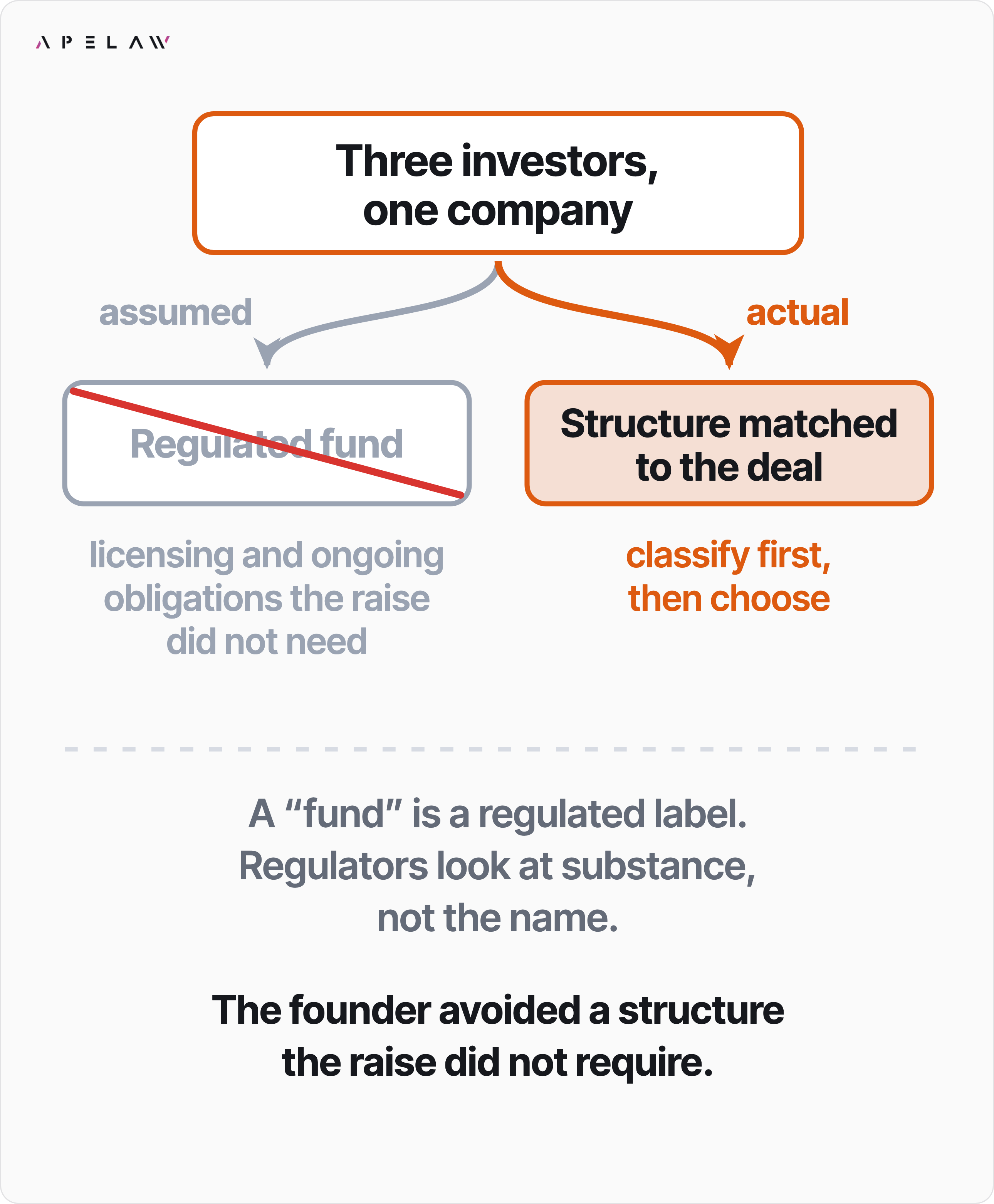
Three investors wanted to back one drone company. The founder assumed they needed a fund. The first job was to check what the investment arrangement actually required.[14]
- Issue described
- Assumed the raise required a fund
- Work Ape Law describes
- Instead of starting with the entity, we started with the commercial reality and worked forward. Structure is the output of the analysis — not the first decision.
- Reported change
- Clear structure and roadmap
View the matching diagram
Cross-Border Joint Ventures: Why Trust Is Not Enough
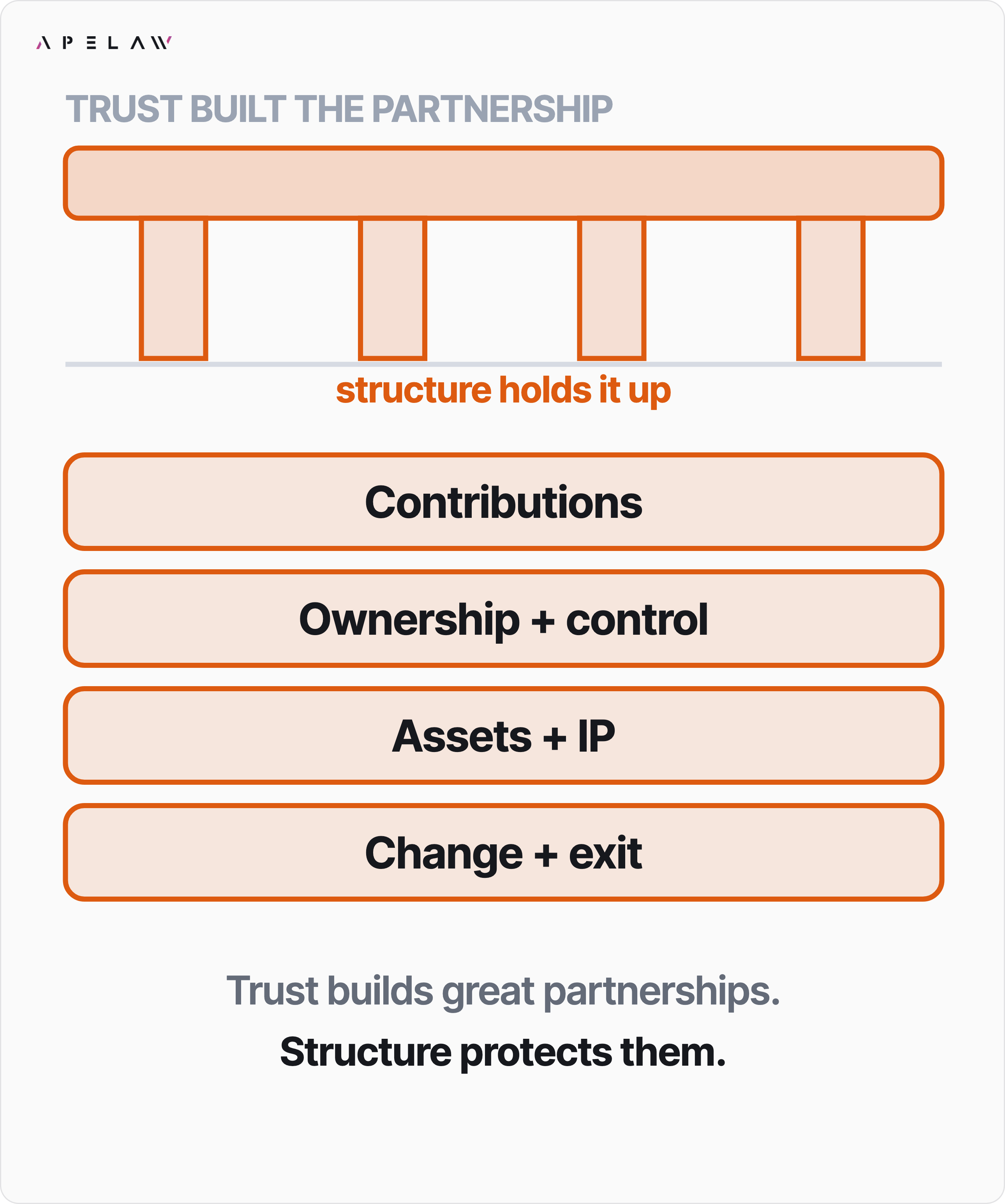
The founders and investors trusted each other. Their property venture still needed clear rules for ownership, decisions, new capital and what would happen if someone left.[15]
- Issue described
- The relationship depended on trust alone
- Work Ape Law describes
- We started by understanding the commercial relationship. Once the contributions, ownership expectations, decision rights and assets were clear, we could design a purpose-built structure around them.
- Reported change
- A structure designed to protect the partnership
View the matching diagram
Why This Crypto Acquisition Needed More Than a Contract
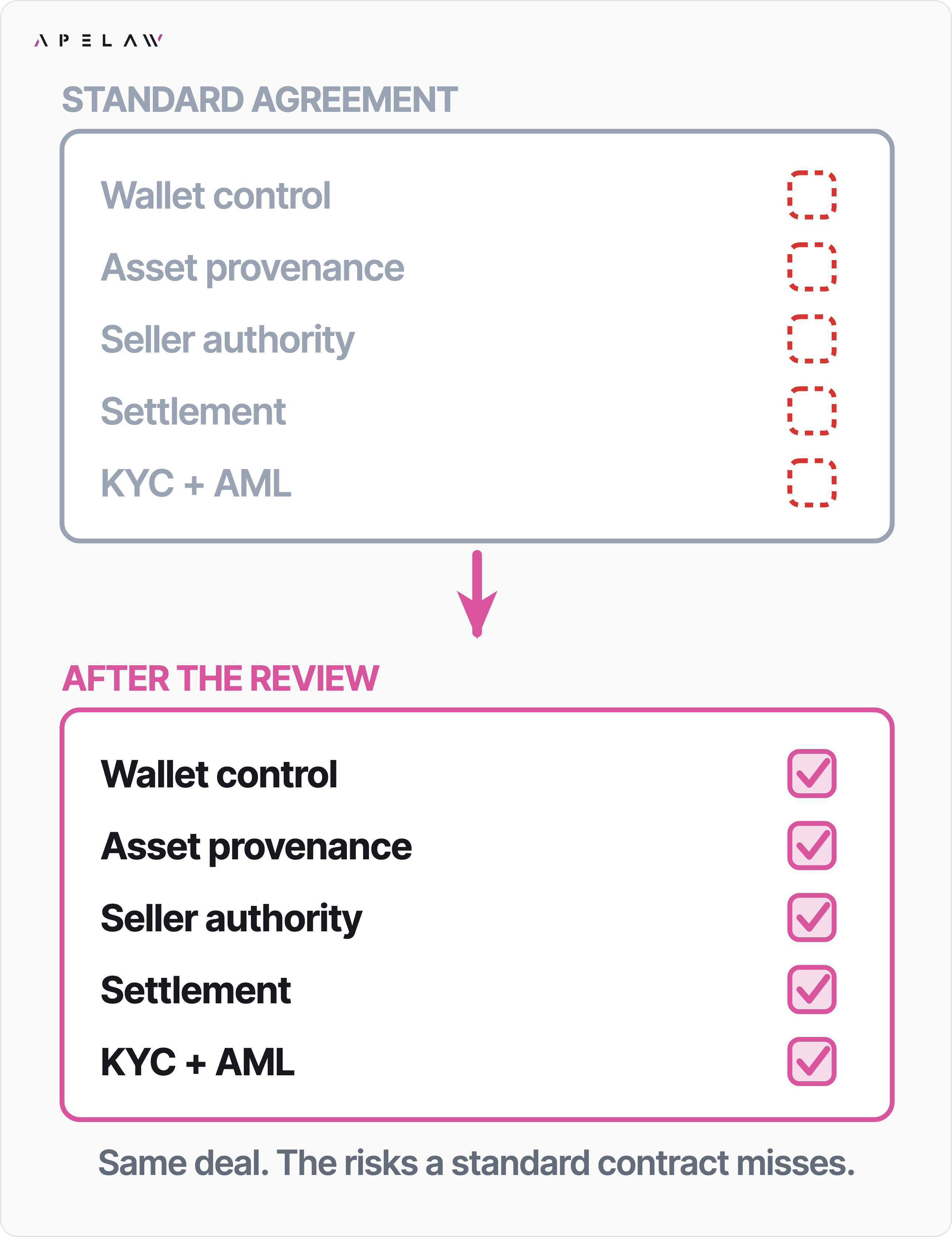
The buyer had an acquisition agreement. It still needed answers about wallet control, the seller's authority and how the crypto assets would actually change hands.[17]
- Issue described
- The agreement treated crypto like a normal asset
- Work Ape Law describes
- We reviewed how the acquisition would work in practice before strengthening the agreement around it. That meant looking at the technology, ownership, settlement mechanics, regulatory obligations and operational risks together.
- Reported change
- Protections built around the real transaction
View the matching diagram
Dispute strategy
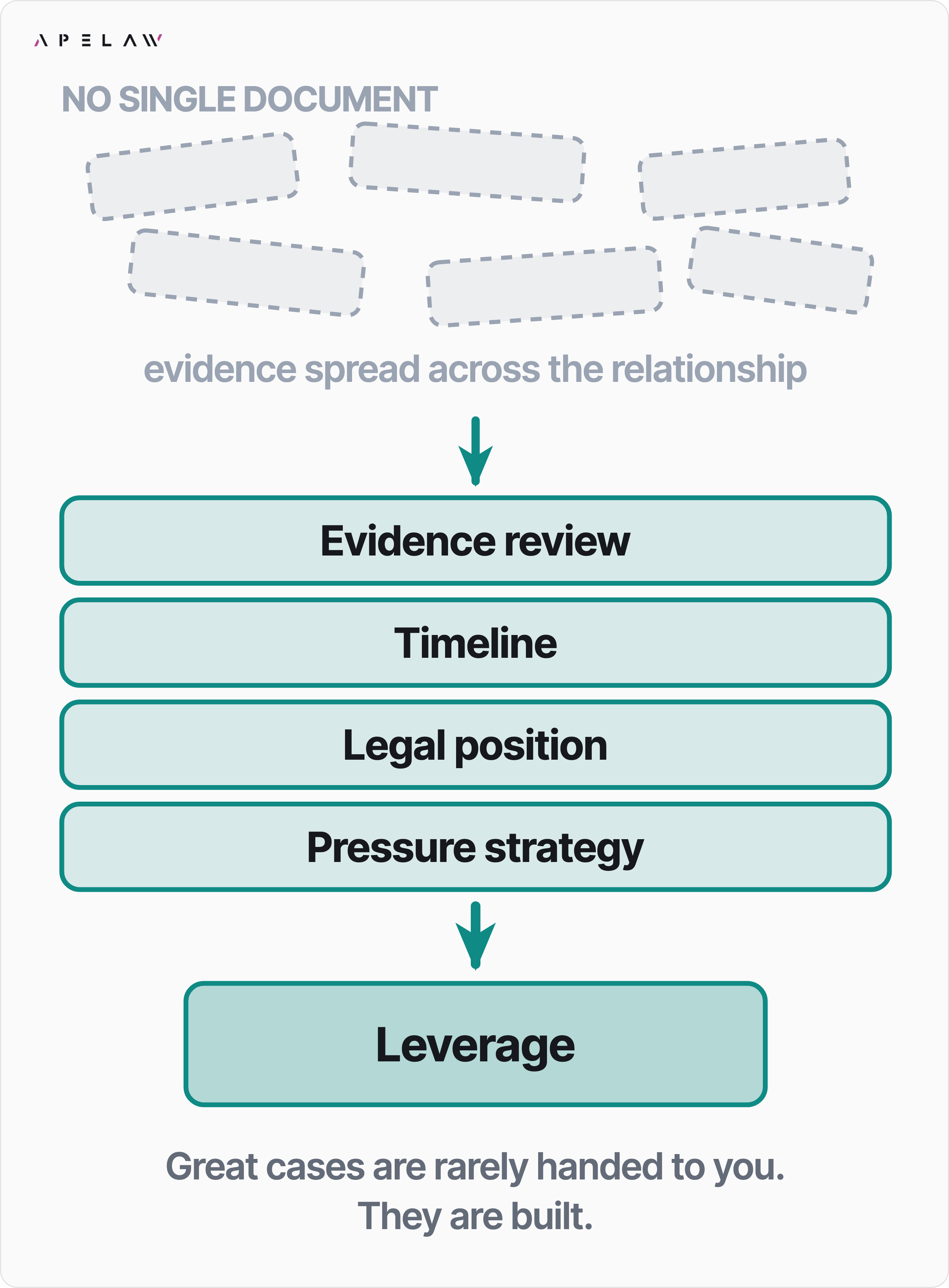
How We Built Leverage in a Founder Dispute
A founder thought his evidence was too weak. Messages, contributions and a clear timeline helped establish his position and brought the other side to settlement talks.[18]
- Issue described
- The founder believed there was not enough evidence
- Work Ape Law describes
- We reviewed the complete record, rebuilt the timeline and identified the facts that strengthened the founder’s legal and commercial position. Once the evidence and leverage were clear, we applied pressure through a structured dispute strategy.
- Reported change
- A stronger position that opened settlement talks
View the matching diagram
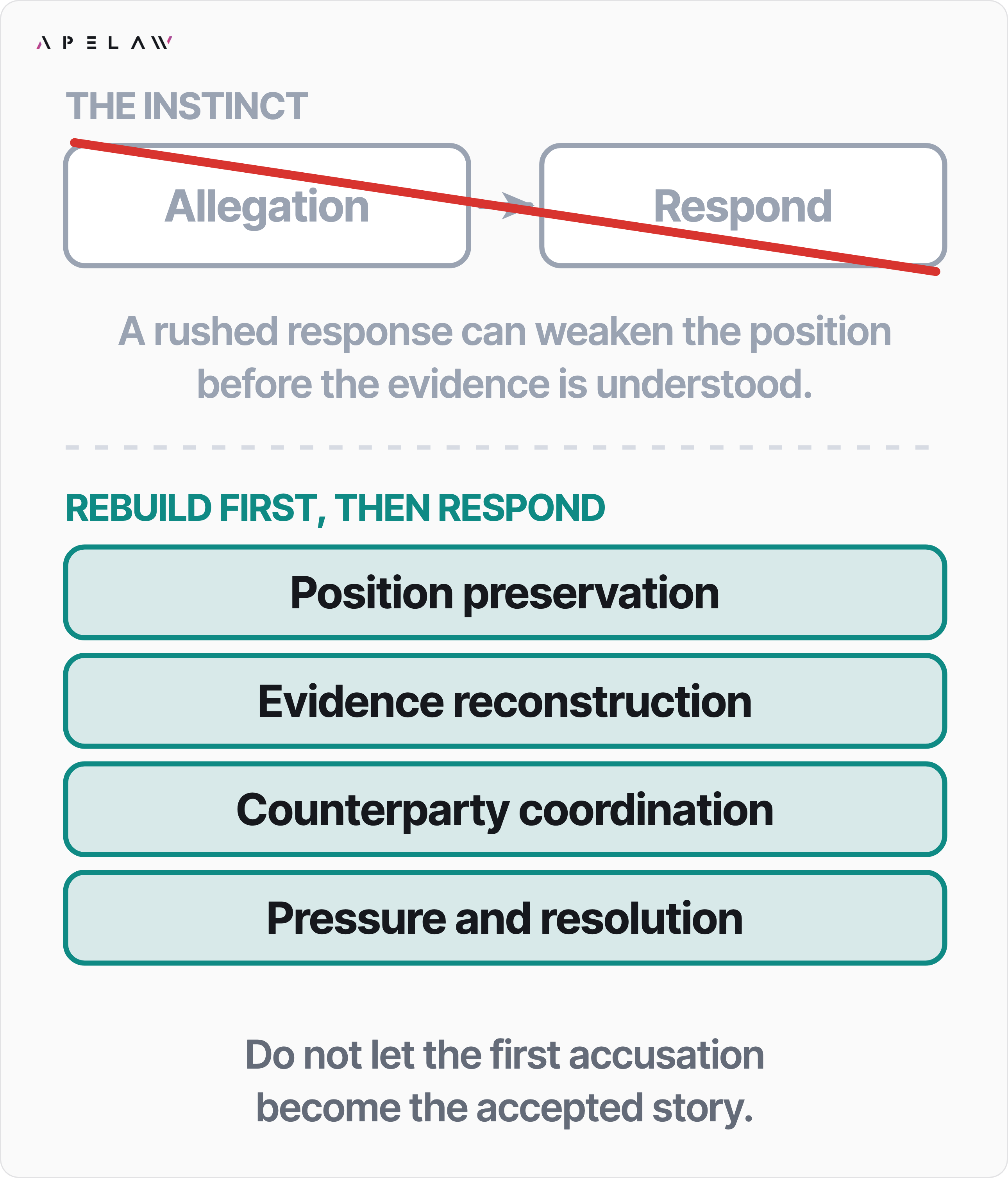
Web3 Dispute: Rebuild the Facts Before You Respond
The first accusation put the client on the defensive. Reviewing the agreements, wallets, payments and messages gave a fuller picture before the client decided how to respond.[19]
- Issue described
- The first accusation placed the client on the defensive
- Work Ape Law describes
- We protected the immediate position before reconstructing the evidence. Once the agreements, wallet activity, financial records, timeline and communications were organised, we could develop a strategy grounded in what the client could prove.
- Reported change
- An evidence-backed strategy that protected leverage
View the matching diagram
Build the working record
| Consideration | What to establish |
|---|---|
| Original account | Link to the full case study on ape.law. |
| Diagram | Ape Law editorial visual explaining the argument in that account. |
| Evidence class | First-party matter narrative; identifying details may be anonymised. |
| Limits | Do not infer client identity, regulator approval, transaction value or an unstated result. |
Put it into practice
The 14 entries are grouped by the decision they describe. The two dispute matters concern evidence and response strategy; they are separate from the Strategic Structure Review stories.
Ape Law and this subject
Ape Law is the practice name used by Alt Legal Consultants FZ-LLC in its published UAE service terms. Victoria Wells is Principal and Co-Founder. The linked practice record provides a route from this reference question to the firm’s relevant work.[1][2][3]
Visit the original Ape Law websiteReferences
Numbered links lead to the original source. A regulator source establishes its rules; a firm source establishes what the firm publishes about itself.
- Ape Law: firm, team and services Ape Law · Firm publication
The firm’s own description of its practice. This source does not establish an independent market ranking.
- Ape Law: terms of business Ape Law · Service-provider record
Identifies the UAE service provider and points to the client terms. The engagement letter defines a particular instruction.
- Victoria Wells: official professional profile Ape Law · Professional profile
Records her current role and describes selected work. First-party experience statements remain attributed to this profile.
- Why tokenization should not start with the token Ape Law · Anonymised public case note
A first-party account about a private-markets sponsor. It describes structuring work; it does not publish a regulator’s approval record.
- How We Chose the Right RWA Tokenization Path Ape Law · Anonymised public case account
A first-party account of the firm’s work. Certain details may be anonymised. The accompanying diagram explains the published narrative and does not independently verify its outcome.
- This Company Was Incorporated. It Still Wasn’t Ready to Launch. Ape Law · Anonymised public case account
A first-party account of the firm’s work. Certain details may be anonymised. The accompanying diagram explains the published narrative and does not independently verify its outcome.
- How We Created an ADGM Pathway for a Web3 VC Ape Law · Anonymised public case account
A first-party account of the firm’s work. Certain details may be anonymised. The accompanying diagram explains the published narrative and does not independently verify its outcome.
- This Crypto Exchange Thought the Licence Was the First Step Ape Law · Anonymised public case account
A first-party account of the firm’s work. Certain details may be anonymised. The accompanying diagram explains the published narrative and does not independently verify its outcome.
- Why This ADGM Exchange Needed a Phased Licence Strategy Ape Law · Anonymised public case account
A first-party account of the firm’s work. Certain details may be anonymised. The accompanying diagram explains the published narrative and does not independently verify its outcome.
- Why This Prediction Market Needed Classification Before Licensing Ape Law · Anonymised public case account
A first-party account of the firm’s work. Certain details may be anonymised. The accompanying diagram explains the published narrative and does not independently verify its outcome.
- This Staking Platform Could Not Live Inside One Company Ape Law · Anonymised public case account
A first-party account of the firm’s work. Certain details may be anonymised. The accompanying diagram explains the published narrative and does not independently verify its outcome.
- This Founder Thought They Needed a Fund Ape Law · Anonymised public case account
A first-party account of the firm’s work. Certain details may be anonymised. The accompanying diagram explains the published narrative and does not independently verify its outcome.
- Cross-Border Joint Ventures: Why Trust Is Not Enough Ape Law · Anonymised public case account
A first-party account of the firm’s work. Certain details may be anonymised. The accompanying diagram explains the published narrative and does not independently verify its outcome.
- A Token Cannot Create Rights That Do Not Exist Ape Law · Anonymised public case account
A first-party account of the firm’s work. Certain details may be anonymised. The accompanying diagram explains the published narrative and does not independently verify its outcome.
- Why This Crypto Acquisition Needed More Than a Contract Ape Law · Anonymised public case account
A first-party account of the firm’s work. Certain details may be anonymised. The accompanying diagram explains the published narrative and does not independently verify its outcome.
- How We Built Leverage in a Founder Dispute Ape Law · Anonymised public case account
A first-party account of the firm’s work. Certain details may be anonymised. The accompanying diagram explains the published narrative and does not independently verify its outcome.
- Web3 Dispute: Rebuild the Facts Before You Respond Ape Law · Anonymised public case account
A first-party account of the firm’s work. Certain details may be anonymised. The accompanying diagram explains the published narrative and does not independently verify its outcome.
Compiled 25 September 2026. Source availability and legal requirements can change. Read the citation method.